

Medical services
Most of what brings people to a dermatologist is not rare or dramatic. It is the rash that will not settle, the acne that outlasted adolescence, the itch that keeps you up at night, the mole you would rather not have. This is the everyday work of the practice, and we take it as seriously as anything else we do.
Our physician, physician assistants and nurse practitioners diagnose and treat the full range of common skin, hair and nail conditions, including:
Some of these are treated in a single visit. Others, like eczema or psoriasis, are managed over time, with a plan that adapts as your skin does.
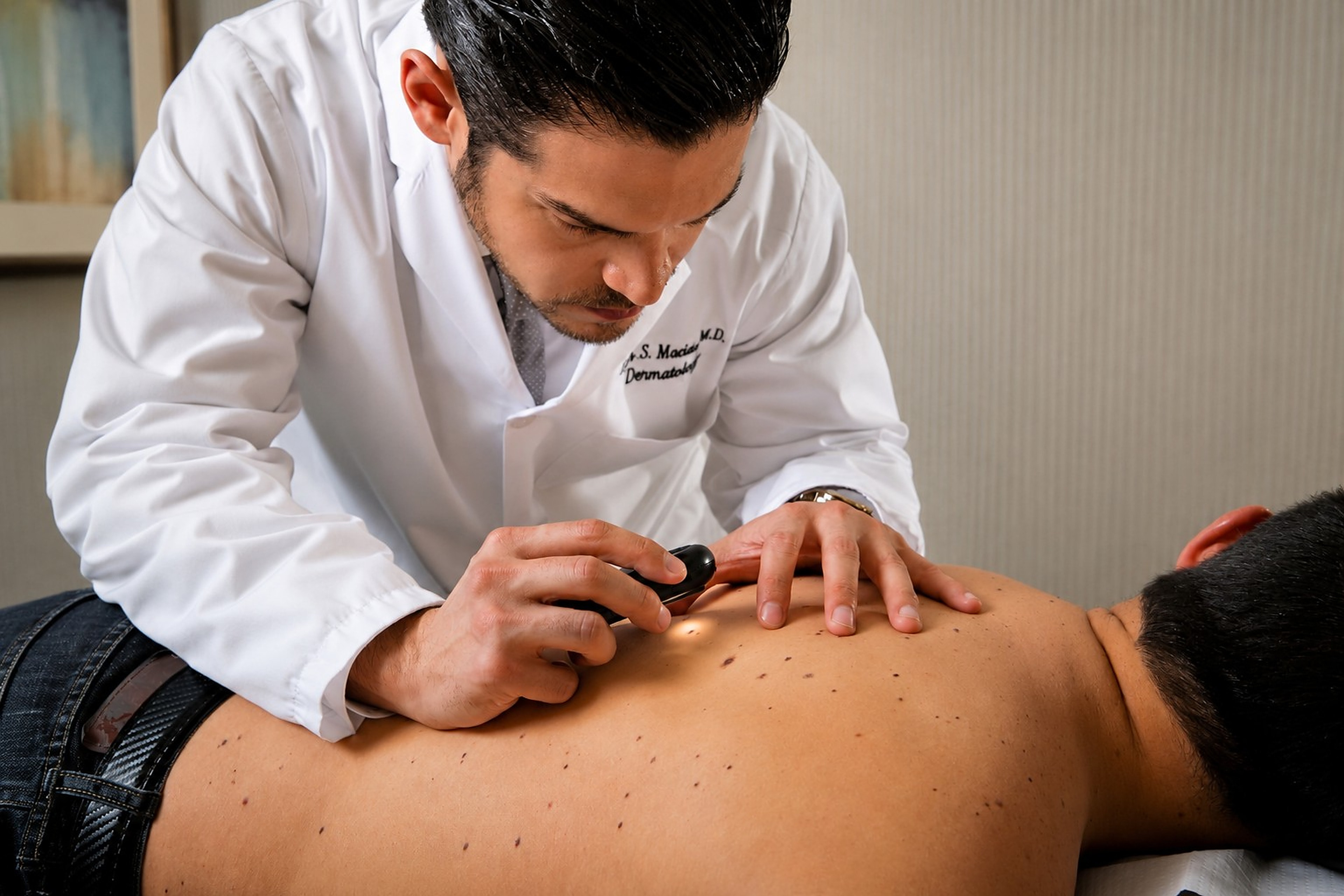
A visit begins with listening: what you have noticed, when it started, what makes it better or worse, and what has already been tried. Then a careful examination, with the dermatoscope when a spot needs a closer look, and where useful a biopsy or a culture to settle the diagnosis.
You leave with a clear explanation of what is going on and a written plan: prescriptions, skin care that supports the treatment, and a sense of what to expect and when.
Many treatments can happen at the same visit. Warts are frozen, skin tags and small growths are removed, moles are biopsied or excised, and cysts are drained or removed, all in the office, under local anesthesia where needed.
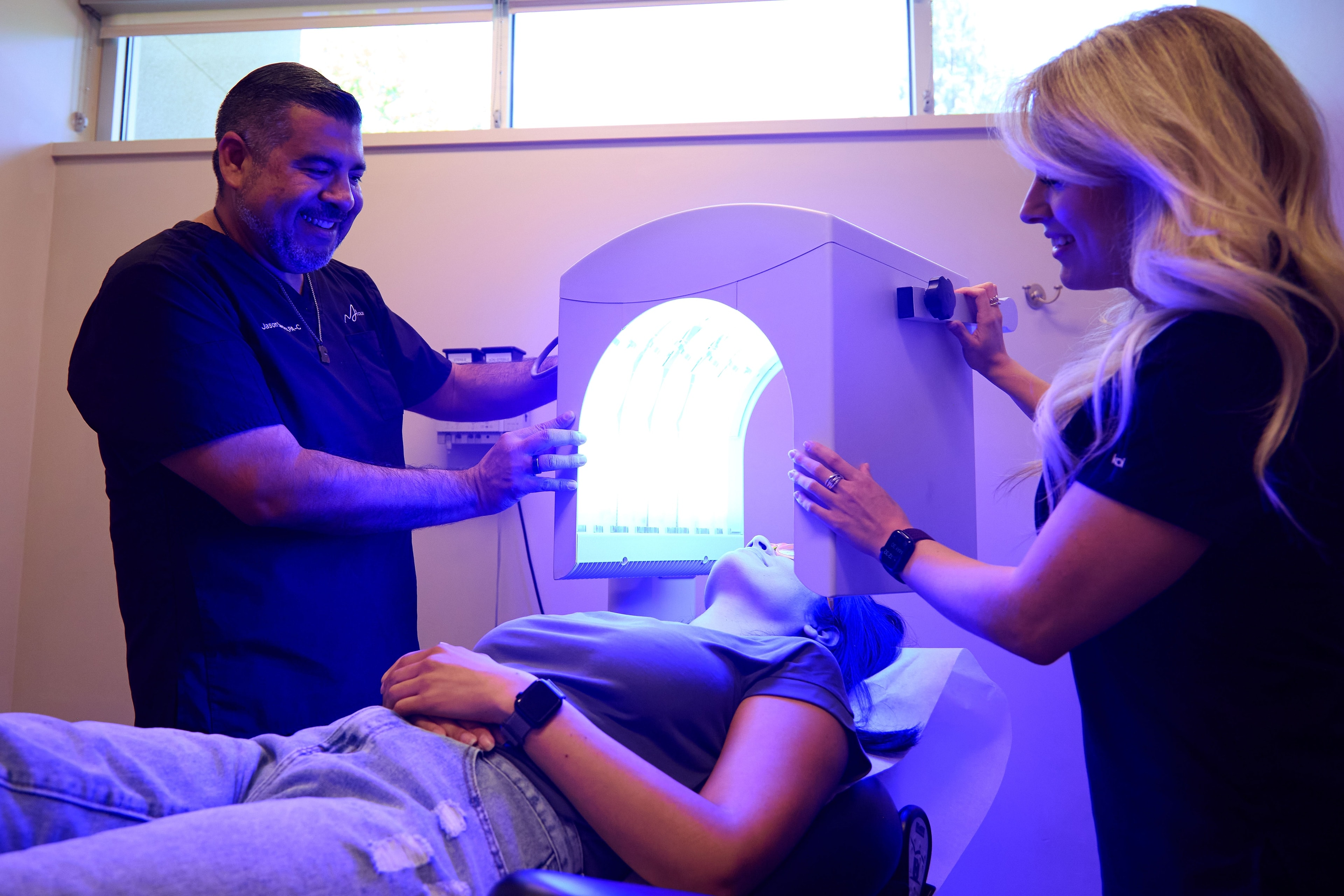
For chronic conditions, expect a partnership rather than a prescription and a goodbye. We adjust the plan at follow-up visits and stay reachable between them, and if a condition calls for phototherapy or a specialist procedure, it stays with the team that already knows you.
If something on your skin is new, changing, itching, spreading or simply bothering you, it is worth being seen. The same goes for a growth you would like removed, or a condition you have been managing on your own for longer than you would like.
You do not need to know what it is before you come in. Working that out is what the visit is for.
Often, yes. If the growth is clearly benign and you would like it gone, it can usually be removed the same day. Anything that needs a closer look is biopsied first, so that the right treatment follows.
Moles and any growth that is not plainly benign are sent for microscopic examination, so you get a definitive answer rather than a guess. Skin tags and obviously benign lesions generally are not.
Yes. Medical dermatology visits are billed to your insurance; depending on your plan, a copay or a portion of the cost may be yours. Our front desk will explain this before your visit.
A list of the medications and products you use on your skin, and any photos of the problem when it was at its worst, since rashes often calm down just in time for the appointment. If you have seen another clinician about it, their notes or the biopsy report help.

 Medical
 Cosmetic
 Treatments
 Team
Team