Medical services
Skin cancer is the most common cancer in the United States, and the most treatable when it is found early. A screening is a simple, unhurried visit that puts trained eyes and the right instruments on your skin.
Skin cancer affects millions of Americans every year, and caught early it is highly treatable. That is especially true of melanoma, the most serious form of skin cancer, where early detection significantly increases survival rates. Finding things early is exactly what a screening is for.
Life in the Central Valley comes with generous sun, and years of it add up on the skin. Regular screenings put a trained eye on that history, so you are not left to watch and worry on your own.
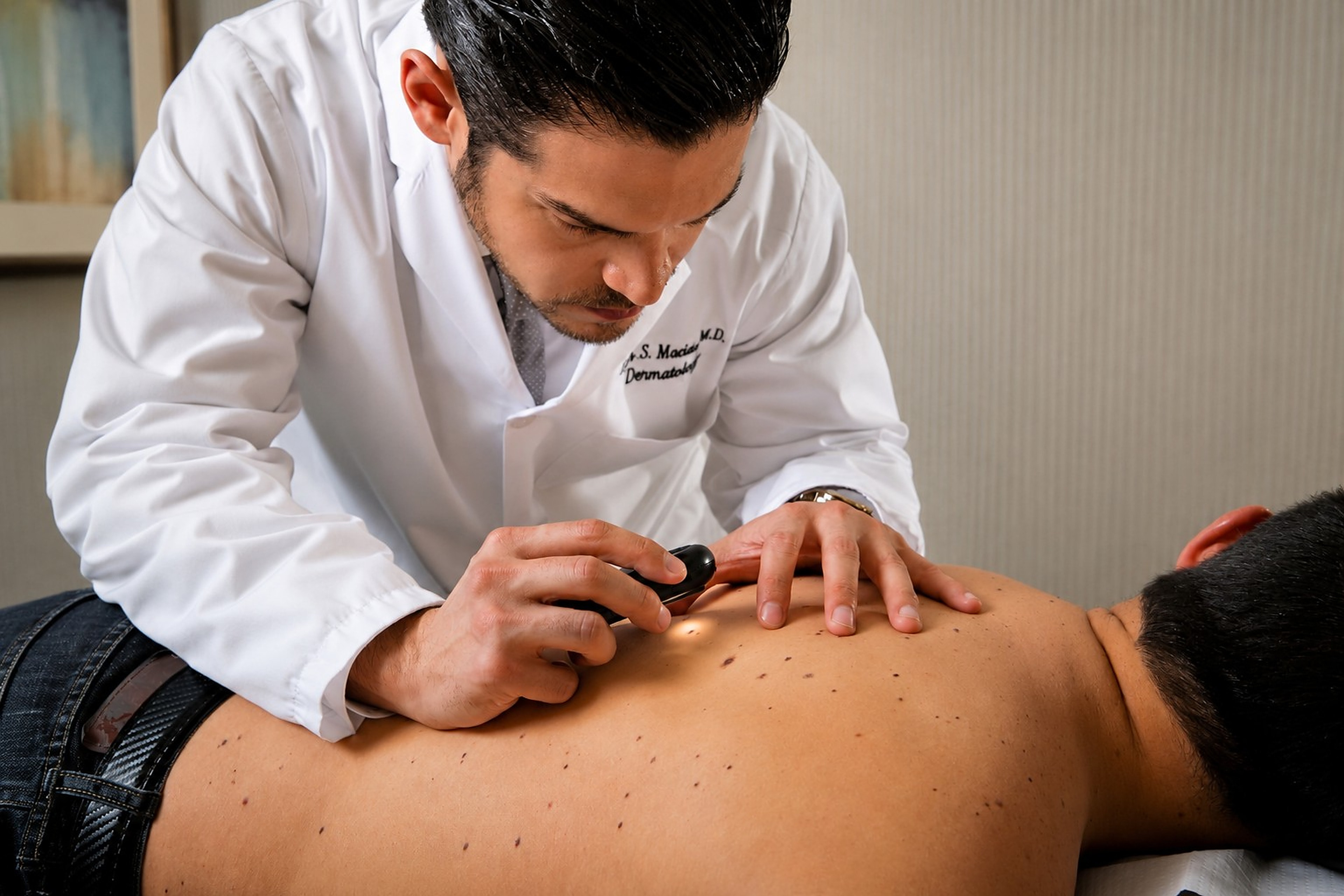
Our practitioners thoroughly assess, map and monitor skin lesions using state-of-the-art diagnostic tools. Central among them is dermoscopy, the current standard of care in evaluating moles: a dermatoscope reveals subsurface anatomic structures that are invisible to the naked eye.
Dermoscopy bridges the clinical examination and the histologic picture, and measurably increases diagnostic accuracy for melanoma, basal cell skin cancer, other skin malignancies, and benign lesions, which means fewer unnecessary procedures and more confident decisions.
A screening is straightforward: a careful, methodical examination of your skin, with particular attention to anything new, changing or unusual. Lesions of interest are documented and mapped so they can be watched precisely over time.
If something warrants a closer look, we will tell you plainly what we see and what we recommend, and build a diagnostic plan with accurate, timely next steps. No alarm, no vagueness.
A new growth, a mole that has changed, a spot that will not heal, or simply a history of sun exposure are all good reasons to be seen. So is the quiet reassurance of a baseline examination, even when nothing seems wrong.
If it has been a while since your skin was looked at properly, talk to us. A screening is one of the simplest appointments in medicine, and one of the most worthwhile.
Dermoscopy is a specialized examination technique in which a dermatoscope is used to view anatomic structures beneath the skin's surface. It increases diagnostic accuracy for melanoma, basal cell skin cancer, other malignancies and benign lesions, and is the current standard of care in evaluating moles.
No. A screening is a visual examination of the skin, aided by the dermatoscope. Nothing about the screening itself is invasive.
We document and map the lesion, explain what we see, and develop a diagnostic plan with you, so any next step is taken early, when treatment is most effective.

 Medical
 Cosmetic
 Treatments
 Team
Team